Zavacephale Rinpoche
Oldest Dome‑Headed Dinosaur Pushes Back the Clock
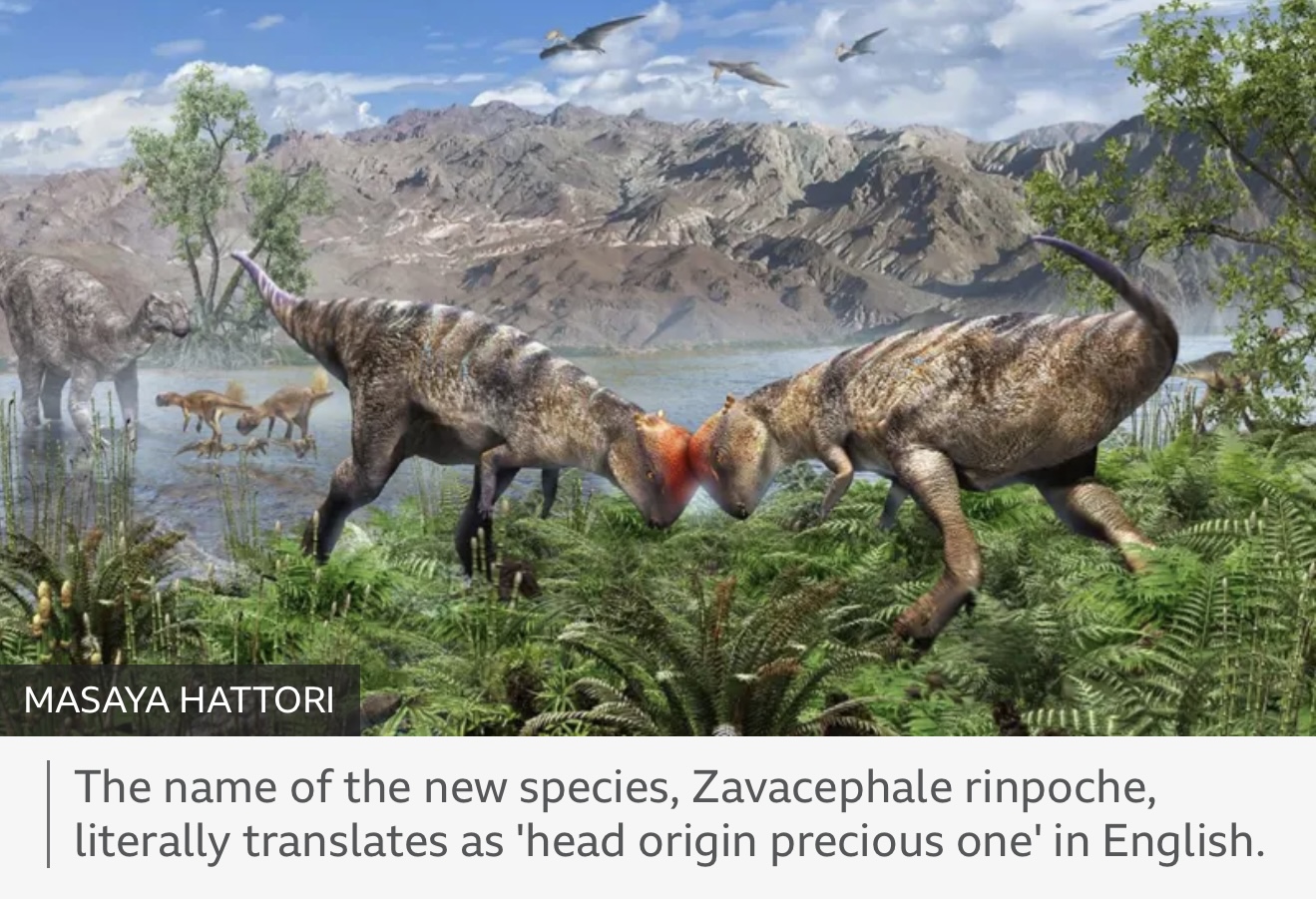
Pachycephalosaurs—the dome‑headed dinosaurs immortalised in films—are usually found in the Late Cretaceous. A stunning fossil from Mongolia’s Gobi Desert, announced in 2025, rewrites that timeline. Named Zavacephale rinpoche, this species lived about 108 million years ago and is both the oldest and most complete pachycephalosaur ever found. Its discovery pushes the origin of the group back by more than 15 million years and provides an unprecedented look at how these head‑butting herbivores evolved.
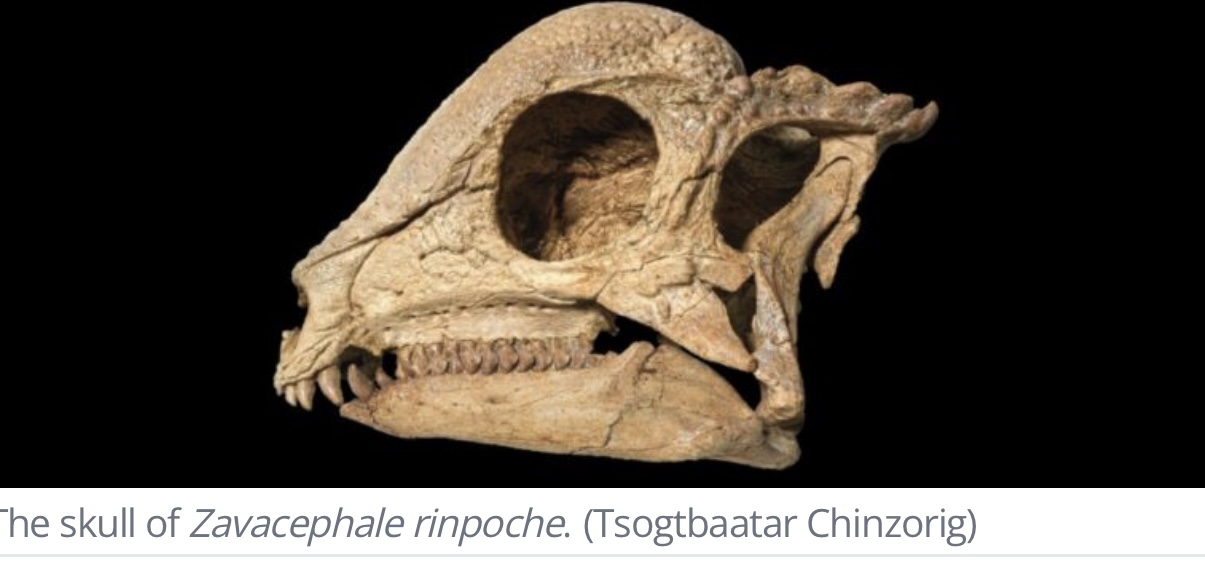
The specimen includes a nearly complete skeleton, with a fully formed dome on its skull despite the animal being a juvenile. This dome is more rounded and less thick than those of its later relatives, suggesting that pachycephalosaurs developed their distinctive headgear gradually. The skeleton also preserves a hand and a full tail—rare finds for this group—allowing researchers to infer how Zavacephale moved and fed. It was probably about 1.2 metres long and moved on two legs, browsing low vegetation in the lush forests of Early Cretaceous Mongolia.
Zavacephale’s discovery has broad implications for dinosaur evolution. It supports the idea that pachycephalosaurs originated in Asia before dispersing to North America and diversifying into species like Pachycephalosaurus and Stegoceras. The fossil also highlights the importance of the Gobi Desert as a treasure trove for dinosaur science. Over the past few decades, expeditions there have unearthed spectacular fossils, from feathered tyrannosaurs to nesting oviraptorids. Zavacephale joins this list, reminding us that the desert’s sands still have many secrets to reveal.
Credit: O.C. Marsh / Public domain
Sources: ScienceDaily article on Zavacephale rinpoche.