Loki’s Horned Face
The Ceratopsian With Blade‑Like Horns
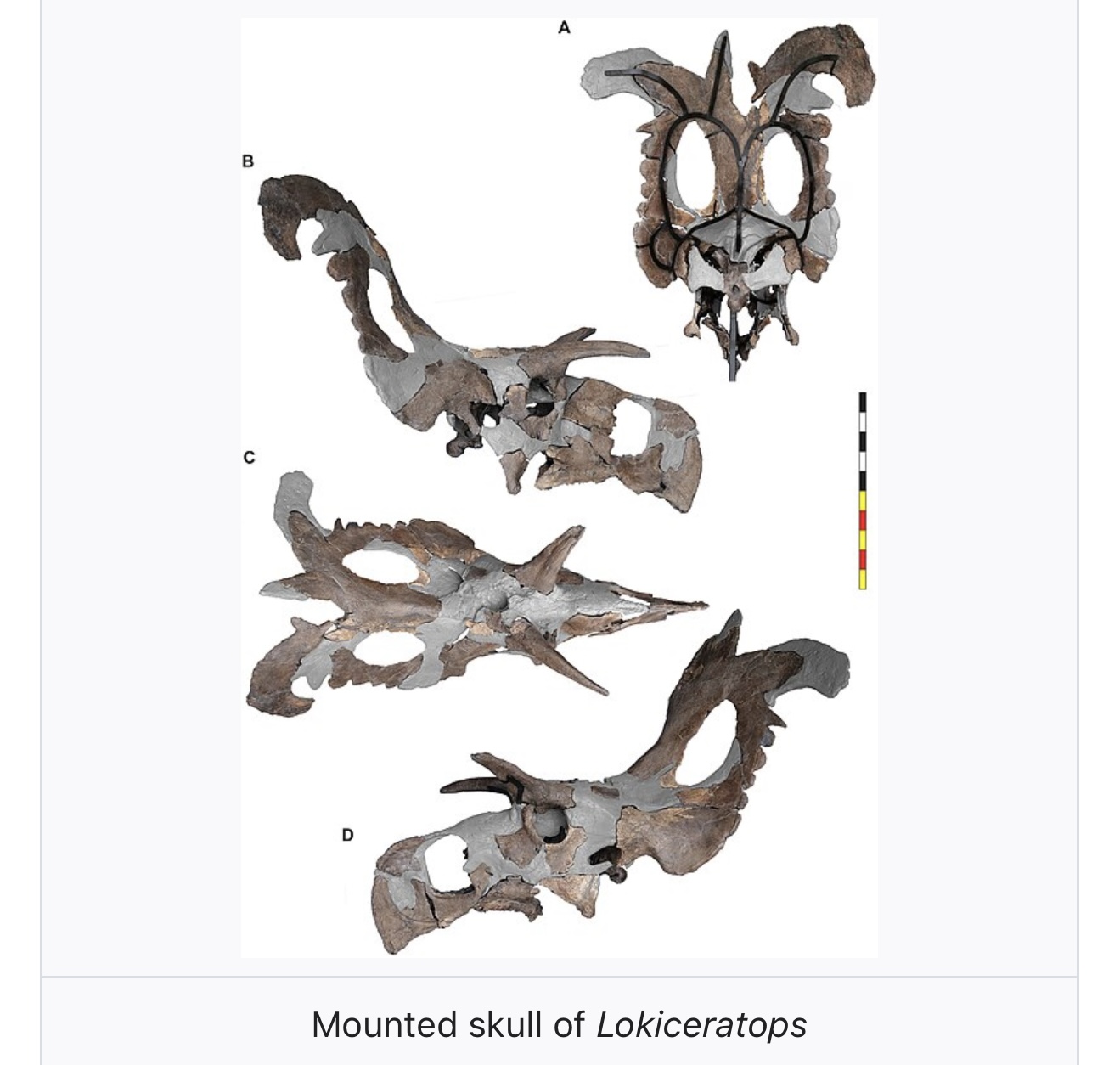
Horned dinosaurs are famous for their elaborate headgear, but a 2024 discovery takes ornamentation to another level. Lokiceratops rangiformis—named for the Norse trickster god Loki and the caribou‑like shape of its horns—was described from fossils found in North America. This ceratopsid sported a pair of enormous, blade‑shaped horns projecting sideways from its frill, along with spikes and hooks around the skull. The horns are unlike those of any other known ceratopsian, leading palaeontologists to suggest they were used for display and species recognition rather than defence.
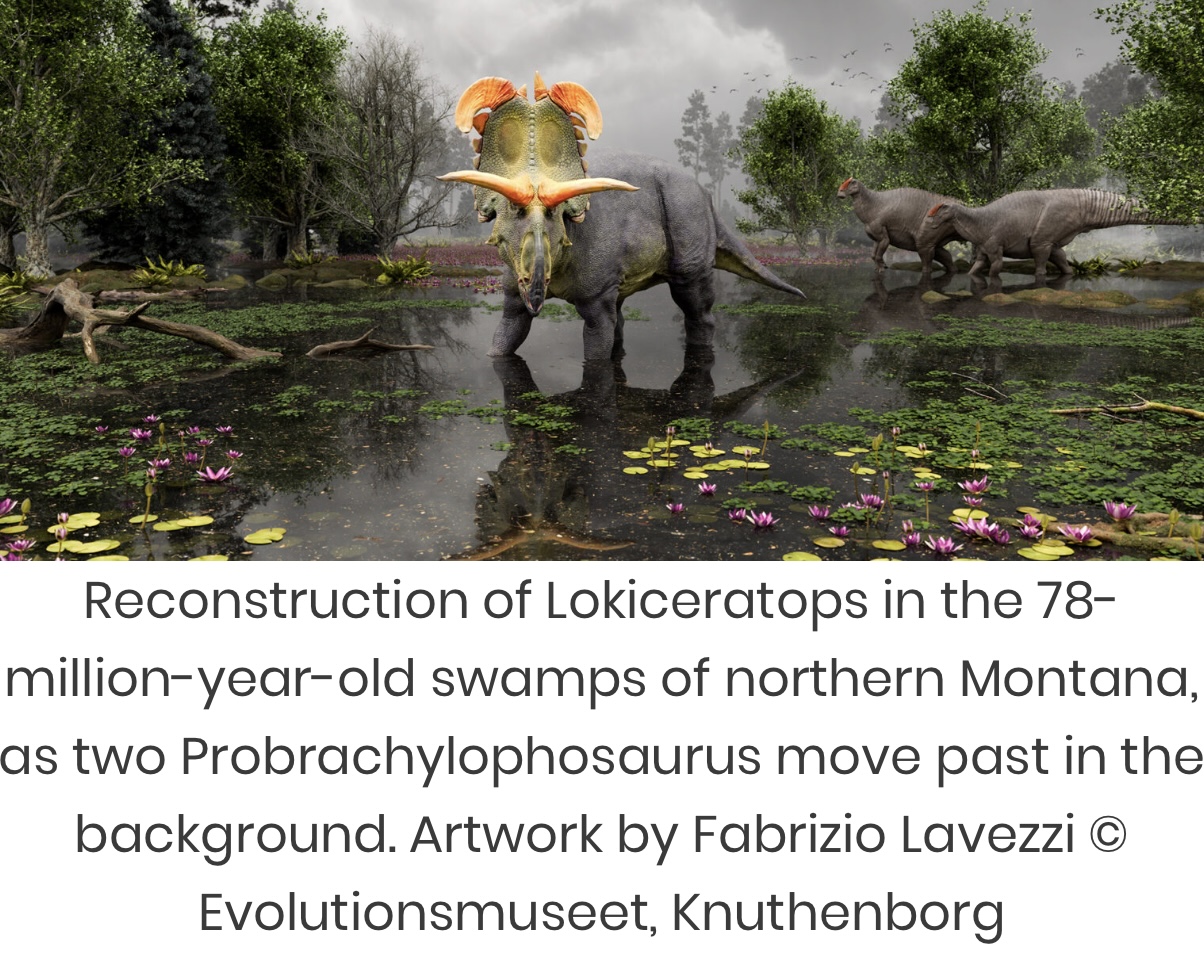
Lokiceratops lived around 78 million years ago and belonged to the centrosaurine branch of the horned dinosaurs. Its skull features include a short nose horn, large brow horns and a frill edged by unique, wing‑like blades. The specific name rangiformis means “caribou‑shaped,” reflecting the resemblance of its horns to a caribou’s antlers. Researchers believe these extravagant ornaments evolved through sexual selection, with individuals advertising their fitness to potential mates. The find adds to the growing number of ceratopsians with extreme headgear, such as Styracosaurus and Kosmoceratops, but stands out for the sheer size and flatness of its frill blades.
The discovery also highlights the rapid evolution and diversity of horned dinosaurs in the Late Cretaceous. Lokiceratops lived at a time when North America was split by a shallow sea, and regional populations were isolated on narrow strips of land. This isolation may have driven rapid changes in ornamentation as species adapted to specific environments or evolved unique displays. The fossil will likely be a star exhibit in museums, capturing visitors’ imaginations with its outrageous horns and reminding us that evolution often produces forms that are as beautiful as they are bizarre.
Credit: Sergey Krasovskiy / CC BY 4.0
Sources: ScienceDaily report on Lokiceratops rangiformis.