Musankwa Sanyatiensis
Zimbabwe’s Fourth Dinosaur and a Window into the Mid‑Zambezi Basin
Not all great dinosaur discoveries come from well‑known fossil hotspots. In 2024 palaeontologists working near Lake Kariba in Zimbabwe announced Musankwa sanyatiensis, a new sauropodomorph dinosaur. The species is known from a single hind limb—thigh, shin and ankle bones—found in the Mid‑Zambezi Basin. Despite its fragmentary nature, Musankwa is significant: it’s only the fourth dinosaur species named from Zimbabwe and the first in the region in more than half a century.
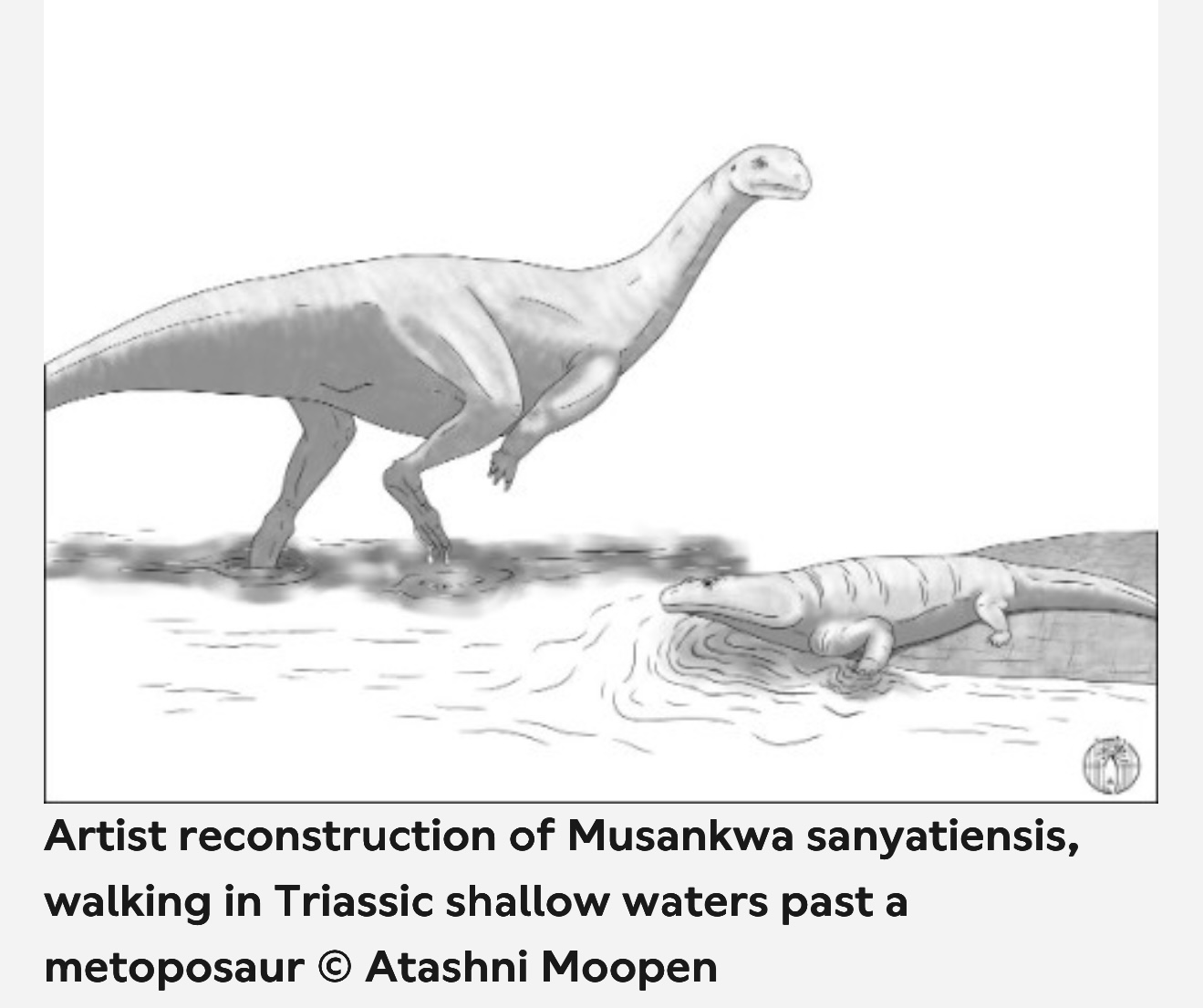
Musankwa was a bipedal plant‑eater weighing about 390 kilograms (850 pounds), making it larger than most of its contemporaries. The fossils show a unique combination of features, including robust limb bones and unusual articulations in the ankle, which distinguish it from other sauropodomorphs. The researchers chose the generic name Musankwa from a local river and the specific name from the Sanyati region where it was found. Its discovery suggests that the Mid‑Zambezi Basin held a diverse community of early dinosaurs during the Late Triassic to Early Jurassic.
Beyond naming a new species, the find has broader implications. Many parts of Africa remain underexplored by palaeontologists, and each new discovery can rewrite the continent’s prehistoric history. Musankwa hints that Zimbabwe’s geological formations could yield more dinosaurs if they receive sustained scientific attention. The project involved Zimbabwean and international scientists working together, highlighting the importance of local partnerships. As new expeditions return to the Mid‑Zambezi Basin, Musankwa will serve as both a scientific milestone and a source of national pride for Zimbabwe.
Credit: O.C. Marsh / Public domain
Sources: Stony Brook University and University of the Witwatersrand press release on Musankwa sanyatiensis